
This feels strange. I’m usually late with my yearly list, taking my sweet time until January or February to catch up on all of the noteworthy releases. This was a quieter year. Some would say weaker than most. There are still several standout titles, and it did prove a bit of a struggle to narrow it down to 10.
Moon Colony Bloodbath and Eternal Decks are the only two games that really come to mind which I haven’t played yet, and which may have appeared here. As always, I don’t include games which have been reprinted with few design changes. Age of Galaxy being ineligible is an example of this. Sometimes this line is very hard to draw, and you can certainly quibble with some of my selections. But it’s my list, so let’s kick it.
10. Metal Gear Solid: The Board Game
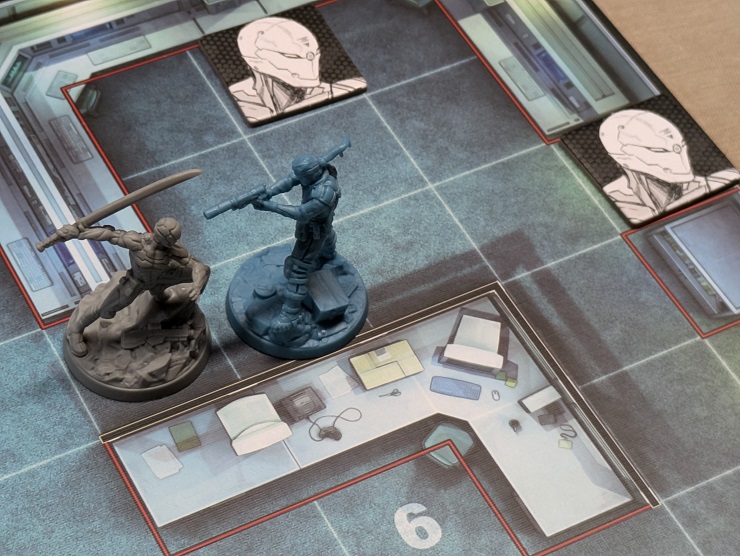
Why it Matters – No one’s talking about this game. Maybe that’s because it’s a CMON publication and that company is desperately gasping for air. Maybe it’s because none of you Muppets appreciate one of the best video games ever developed. Regardless, Emerson Matsuuchi’s stealth action board game is suitably epic, capturing the story beats, nuance, and enthralling gameplay of its source. This is a legitimately compelling tabletop design that takes players through the various high notes of MGS2, including a magical confrontation with Psycho Mantis that is award worthy. Here’s your award Emerson. It means nothing. Congrats.
Why it’s not Higher – This is somewhat niche. The subject matter will limit the audience, but also the format of play. The idea is to play through the scenarios in order, but the gameplay defers to the framework of the video game at all times. This means some scenarios are solitaire endeavors, some are two-player, and some support a larger group. There are no options to modify this or brute force your group into it. One-off VR Missions allow for a taste of the game, but they’re not the reason someone would buy a ticket to the ride. I also don’t think many will want to re-experience this game once they’re done with the storyline. Maybe after a few years, but that necessarily limits its significance. Finally, the retail edition does not include the comic panel interludes between scenarios, which is a significant loss in terms of storytelling.
9. Nature

Why it Matters – What a turnaround. North Star Games’ Evolution series never really grabbed ahold of me, only drawing my interest momentarily with Oceans. There’s something about Nature though. To be clear, I’m not particularly enthralled with the no-frills base game experience. It’s approachable and caters to a wide splay of participants, but it’s not very interesting. This game was designed with the intention to integrate modules. These include things like Flight, The Amazon, and the violent Jurassic.
With a module or two integrated, Nature shifts into a dynamic and nuanced tableau builder steeped in conflict. You have to evolve your creatures in response to their environment, perfectly capturing the game’s scientific themes. This mechanical variety and the way in which the tableau space is altered with each of the various expansions adds a tremendous amount of variety. My interest spikes, and the game takes on new life. Tinkering with various combinations – such as melding heavy carnivore Jurassic play with the bluffing of The Amazon – is fruitful exploration which provides a great deal of texture. There is a lot going on with this product line, but when taken as individual segments and actually put to use on the table, it’s a smooth and straightforward Euro-style tableau builder with heads up tactical card play.
Why it’s not Higher – I really want to see this thing open up. Something akin to the wild late-game evolutions in Oceans. Currently, it buts right up against something really special, but it hasn’t quite got there for me. I also have concerns about storing this game long-term, and about the fatigue associated with setting up a game when you have shelves full of expansion boxes to sort through. It’s in danger of becoming something that doesn’t see the table, and that would be a shame.
8. Origin Story
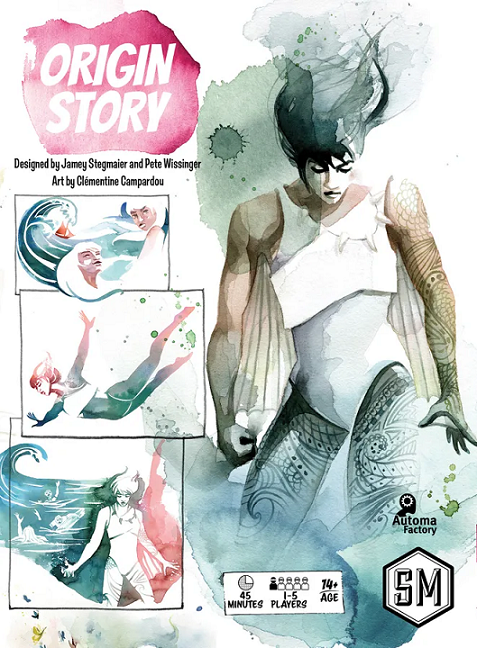
Here’s my recent review of this one.
Why it Matters – The wild tableau building and event deck establish this design’s turbulent spirit. This is the closest thing I’ve experienced to an Ameritrash trick-taker, and it speaks to me. There are times when it feels broken, times when it’s difficult to fully grasp the game state and what players are capable of, and it’s continually full of surprises. It’s a dramatic game that bucks tradition to go for the throat. If you’re looking for something contemplative, this isn’t it. It’s empowering and joyful. It’s seductive.
Why it’s not Higher – For all its dynamism, I sometimes wish it was even more unhinged. All of the character powers, while significant, tend to produce a roughly equal effect with competent play. I suspect this is a minority opinion, but I wish the game had even less guardrails. I wish there was something as bananas as the Forum in Glory to Rome, or rare instances where someone built a combination so powerful it actually did break the game. It would fit the setting and themes of the game so well.
7. The Old King’s Crown
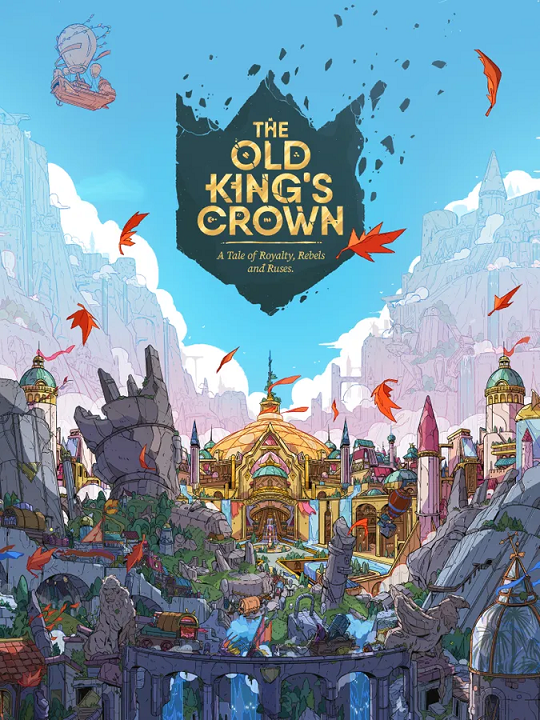
I believe I was the first person to formally review the final production copy of this game. You can read that piece here.
Why it Matters – I almost feel guilt-stricken by not placing this higher on the list. It’s a wonderful game whose surface beauty matches the intensity of its underlying systems. First time auteur Pablo Clark fulfilled this design’s promise with stunning alacrity, and I’m continually impressed with the amount of drama and tension packed into this experience.
There are so many elements this game touches on, and it does so without falling back on well-established mechanisms or an expected framework. It has some of that indie spirit of a Jenna Felli or Nate Hayden design, one where the author seems uninterested in trends. That’s why descriptions of this game are hard to really come to terms with. It’s sort of like Citadels but not really. The battle system is kind of an auction kind of an area control thing, but neither of those descriptions really paint the picture. It’s an asymmetric game with some of the fire of Root, but it doesn’t really do anything like Root.
Unsurprisingly, the Wild Kingdom expansion is fascinating. I will be reviewing that very soon.
Why it’s not Higher – As I mentioned at the outset of this entry, I feel like this game should be placed higher. Sure, it struggles a bit at four players due to a high propensity for chaos, and it can go a little too long at times when it clocks in at three or more hours, but those bruises don’t amount to much on the whole. Frankly, the top half of this list is quite strong, and those titles just narrowly inch out this one by the smallest of margins. I would go so far as to say the seven through four positions are virtually interchangeable here.
6. Purple Haze

You may have forgot I reviewed this one. It was many months ago, and it was one of my favorite pieces of the year. Check out that article here.
Why it Matters – Purple Haze is a modernization of Ambush!, not only improving on that prior-games’ system, but also buttressing it in the Vietnam War. That ethical quagmire is the perfect setting for this style of game, presenting not only difficult tactical challenges via ambushes and isolation, but also agonizing moral quandaries through civilian interaction and war crimes. This game is personal and contemplative, not shying away from the horrors of war.
While an expensive product, it does offer a substantial amount of content with 10 missions. There are expansions of various size that have proven somewhat difficult to track down at retail, but there is hope for a future reprint. This game needs to continue to exist and breath life into the wargame genre. It needs to influence future designers and re-establish the CONSIM paragraph format as a legitimate tool for storytelling on the tabletop.
Why it’s not Higher – Even after all this time since I’ve reviewed the game, I’m still not fully settled on the firefight system. It’s a nice change of pace as the game zooms in to a turn-based skirmish, but it adds such a significant rules bulk onto the design that I can’t help but question it. This is the primary reason why this game may struggle to return to the table after a long hiatus, as re-learning the dice and combat system will take some time.
The writing is also solid, but it’s not equivalent to the upper echelon of Tainted Grail or Aeon Trespass: Odyssey. If it was just a hair sharper the game would greatly benefit.
5. Vantage
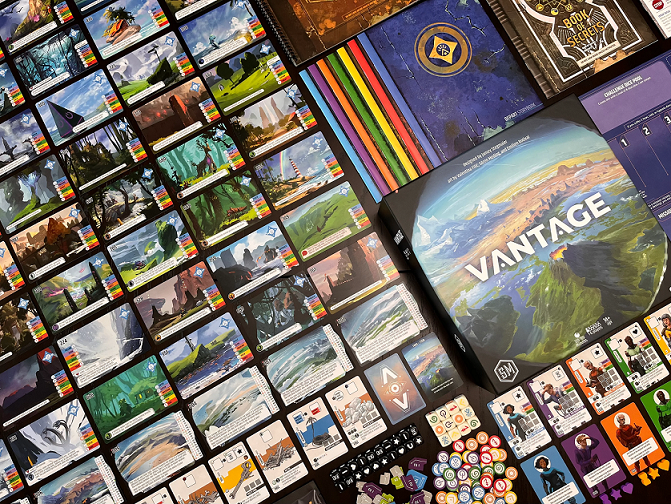
I’ve written about Vantage twice. My initial review was at IGN, but I also wrote a follow-up piece here.
Why it Matters – There was an extended moment of a couple of months where Vantage was my game of the year. It is deserving of that level of praise, offering an open-world exploration system that fixes many of the issues present in its peers. I think it’s a much stronger game structurally than 7th Continent or Sleeping Gods, for instance. Its permissive philosophy means everything within reach is accomplishable, and this fuels an engine that can spin the story off in a multitude of bizarre and fascinating directions.
As I discussed in my follow-up article, one of the most alluring qualities of this design is how it can present little vignettes of storytelling with almost no fuss or difficulties. The ruleset is simple, setup is immediate, and it gets you right into the narrative immediately. What’s crucial to the experience is that the payoff is often worthwhile, with truly wild stuff waiting to be discovered.
Why it’s not Higher – That payoff is not guaranteed. Sometimes Vantage fizzles out, sputtering along and never really going anywhere. It’s part of the personality here, as the whole escapade is unpredictable. It’s also often unclear in its action system, as the keywords on each card can be opaque. Stumbling into a situation which you didn’t intend doesn’t feel right, as if you and the game are not understanding each other. Enough milquetoast encounters and the magic of the game begins to dissipate.
4. Hot Streak

Check out my review of this ridiculous betting game here.
Why it Matters – CMYK has quickly ascended to one of the most consistent publishers in the last few years. Hot Streak was a revelation of sorts, completely ousting multiple titles from my collection, including Ready Set Bet and Camel Cup. This game is sillier, more direct, and more satisfying than its peers. There’s a magic in this game that’s impossible to grasp or form into words. As long as you’re hitting the turf with a rowdy crowd that’s committed, this thing just slaps. And it’s all so simple. Grab a hold of some bets and start cheering.
Why it’s not Higher – With a mellow crowd it’s abysmal. The race isn’t very exciting without the context of the audience, and it will play as lifeless as it appears with a bunch of curmudgeons. It’s also a little one-note, harming its ability to impress when thrown down in back-to-back-to-back sessions. It needs some time to breathe between plays, some time to recuperate after all those twisted ankles and turf burns.
3. The Lord of the Rings: Fate of the Fellowship
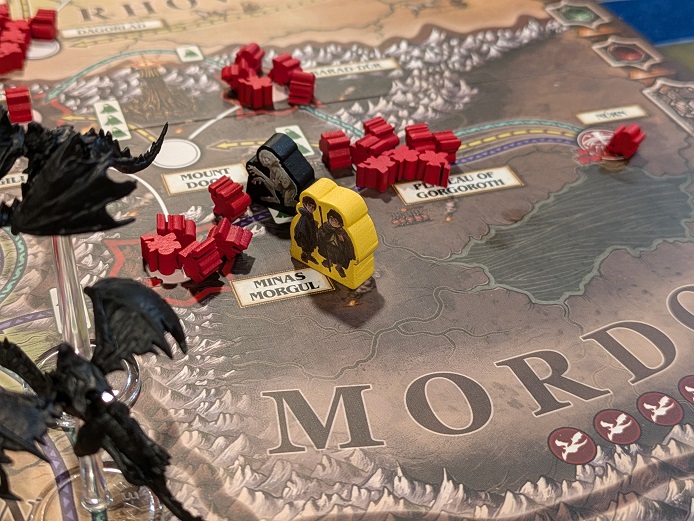
This thing came out of nowhere and floored me. Read all about it here.
Why it Matters – I spell it out pretty clearly in my review, but this game captures fragments of other Lord of the Rings tabletop experiences and melds them together to craft one of the best literary experiences to be had in board gaming. It has the grand conquest of War of the Ring, the hardship of the ringbearer in Reiner Knizia’s cooperative design, and the intimate questing and narrative flourishes of Middle Earth Quest. It may not be as strong as War of the Ring or MEQ, but it’s shorter and offers an experience that sits between them both, balancing the personal with the epic. This accomplishment in scope in magnificent, and it all sits atop a gripping system that bears only traces of its Pandemic lineage.
I appreciate this game’s difficulty. When configured properly, it elicits that epic struggle inherent in the literature. Tossing the ring into Mount Doom feels earned. It’s spectacular.
Why it’s not Higher – There are a significant number of legitimate nitpicks in this design. The Nazgul flight stands are obnoxious. The necessity for someone to play Frodo as one of their two characters is underwhelming. The seemingly random difficulty spikes can result in poor experiences. And the otherwise excellent end game can be a dud if you roll into Mordor with a ton of Hope. Look, none of these wounds can pull this thing out of my top three board games of the year, but they’re real and they may result in you enjoying this game much less than I have.
2. Molly House

My review of this entrancing game can be read here.
Why it Matters – Molly House is a bold design from Jo Kelly and Cole Wehrle that explores identity, revelry, and joy. It also features hardship, anguish, and betrayal. This is a biting game about gender-defying mollies in 18th century London risking their lives in order to flourish. It features a centralized card mechanism which is distinct and opaque. The whole game is sort of uncomfortable, challenging your instincts and undercutting expectations. But that discomfort shifts to wonder and then to bliss as understanding expands.
This is a wonderful game, one which I grew fonder of with each session. Like Wehrle’s other work, it flirts with restricting agency which establishes an unflinching vision for players wanting to immerse themselves into the world on offer. I would only recommend this title to those who want to engage the work across multiple plays, for it demands a certain level of extended inquiry to wring the most from its existence.
Why it’s not Higher – This is a best of the year title. I struggled with whether my top choice was even eligible for this list and went back and forth numerous times. Eventually I capitulated and decided it needed to be here. Molly House is the primary casualty, getting pushed back into second chair. That’s not to say it’s flawless. I wish it was just a touch more intuitive. I wish it took us closer to two-hours than three to play. I wish I fared better and recalling the rules between plays.
1. Magical Athlete
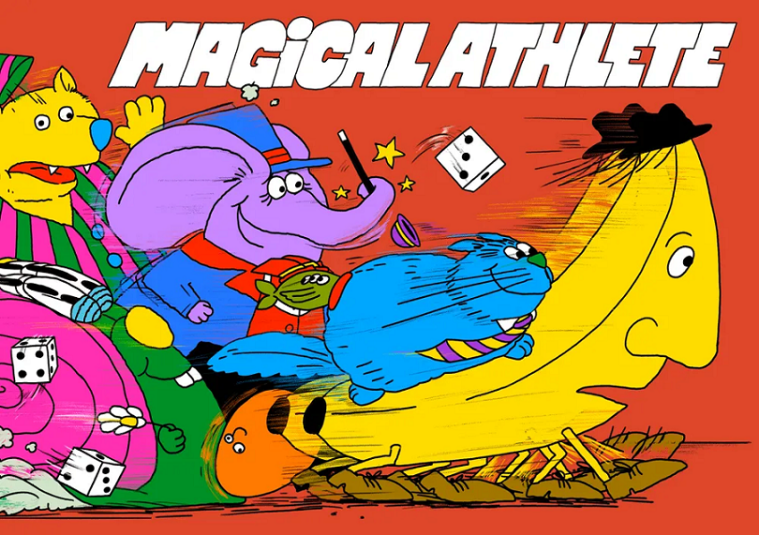
Catch my extremely enthusiastic review right here.
Why it Matters – I declared CMYK’s version of Magical Athlete perfect. I stand by that. I can’t imagine the game receiving a more grandiose treatment. Is this edition altered enough from the 2003 release to satisfy my arbitrary list requirements? I’m not sure. I erred on the side of celebrating Magical Athlete. It’s worthy of top recognition.
This is maximal absurdity. Roll and move with dumb powers that cascade and spark off each other. Unpredictable outcomes are enhanced with a new track, tweaked racers, and even new competitors. The game offers laughs and memories, with just a trace of interesting mechanical flare. It’s what board gaming is all about at its very core. It’s a call back to childhood with a connection through spirit and verve as opposed to intellectualism or deep strategy. This is the kind of game that many feel as though they’ve outgrown, but in leaving behind such youthful mirth, they’ve lost the meaning of games and play. Give it up for Magical Athlete.
If you enjoy what I’m doing and want to support my work, please consider dropping off a tip at my Ko-Fi or supporting me on Patreon. No revenue is collected from this site, and I refuse to serve advertisements.
 Player Elimination
Great stuff. I only played three of them but at least they were the top three.
LikeLiked by 1 person
Thanks, Marc!
LikeLike
Magical Athlete absolutely deserves the number 1 spot. I pulled out my copy at BGG.Con two times this year, and I had 3 people pre-order the reprint before the game was over. My only complaint are some of the rules decisions they’ve made around positive feedback loops (looking at you Suckerfish and Romantic/Scoocher). When Tim Schaeffer posts on BGG about how your rules decisions lead to bad game design, you should question your stance… Fortunately it’s never happened to me, and it’s easy enough to fix with some simple house rules if it ever does.
I need to get brave enough to tackle the Molly House rules with my group, but haven’t had the right group makeup when I’ve had the time to adequately prepare.
I really love Hot Streak, but I think there needs to be a few more options for bets. It certainly starts to suffer at the higher player counts with lack of options. But that’s just a minor quibble, I’ve always enjoyed myself even though I always lose. All the haters trying to claim it’s a “coin/card flip” game really aren’t seeing the control you possibly can exert on the deck.
I’m torn about The Old King’s Crown, I think I want to like it more than I do. The “randomness” of the game feels a bit too punishing for the weight and length of it. The one power to force discards is just so disproportionally and universally painful, I feel it almost dominates the mid-game. And it just feels so bad for everyone else. Maybe if it played faster, but that’s never going to happen in my group. After my first play, 2 of the 4 basically said they’d never play it again (and one of them won), and after my second, we lost a 3rd player. In any case, I think your ranking of it is appropriate.
LikeLiked by 1 person
Oh, and Vantage has also slipped for me, it’s just a bit too long and unreliable as a multi-player experience (the only way I’ve played it). I think you have to go into it ready to just enjoy it for what it is, but it sucks when someone is on this amazing adventure and you’re stuck in a rut.
LikeLiked by 1 person
It was surprising to read your #1 after seeing your #4, because to me magical athlete suffers from mostly the same cons as hot streak.
LikeLiked by 1 person
I agree that it also benefits from an enthusiastic crowd, but I think the interactions and interesting ability provide a little more to grab a hold of. I also think the high moments of Magical Athlete eclipse those of Hot Streak. MA also holds up to heavier play in a compressed time for me due to the variety in character abilities.
LikeLike
I have not seen that Tim Schaeffer post, going to track it down now.
Molly House is worth the effort. My affection for it grew with every play as my strategy began to blossom and I was able to negotiate and work the system.
I wouldn’t mind 1-2 more betting options similar to the sidebets. I think a great solution would be something like prop bets. A large deck with one randomly shuffled into the main racing deck blind. As soon as it comes out during the race, people would need to bet on the prop bet. Things like “Will Gobbler move in the next three cards?” or “Will someone cross the finish line before the deck empties?”
The wanting to like Old King’s Crown more than you actually do seems prevalent with the game. That Uprising faction ability is very powerful, but I don’t know that it’s warped the game in a way where we take note of it in a special way.
LikeLiked by 1 person
Despite absolutely HATING prop bets in sports, or really anything in real life, that’s a crazy interesting idea for Hot Streak. Not exactly sure how to make it work mechanically, but thematically it’s definitely inline for some degenerate gamblers…
LikeLike
great list, I need to check out Purple Haze. Did you try War Story: Occupied France? One of my favorites this year – similar tense paragraph-driven war storytelling with simpler combat than Purple Haze.
LikeLiked by 1 person
Thanks! I have played completely through War Story and enjoyed it. I considered it for my best of 2024 list (I played it last November/December), but I had a very tough time as 2024 had a lot of great releases.
My review of War Story is here by the way: https://playerelimination.com/2024/12/23/a-war-story-occupied-france-review/
My review is here:
LikeLike
Ah, I missed your War Story review and forgot it was 2024 release. Yes, 2024 was a very strong year!
LikeLike
Who is Tim Schaeffer and where is the thread on BGG? I looked at various forums and could not find it.
Thanks
LikeLike
Time Schafer (spelled it incorrectly before): https://en.wikipedia.org/wiki/Tim_Schafer
This thread/post is what’s likely being referred to: https://boardgamegeek.com/thread/3577490/article/46691516#46691516
LikeLike
Thanks Charlie
I always appreciate your writing my man, and although I have only played hot streak and magical athlete I agree that they are top 10
LikeLiked by 1 person
Thank you!
LikeLike
Sorry, my bad, I let my phone give me a plausible spelling and figured it was good enough…
LikeLike
Great list! Thank you for acknowledging Metal Gear Solid, which is my favorite game of last year (even ahead of The Old King’s Crown, which I haven’t played enough yet). It’s criminal that MGS hasn’t received more attention, as it nails its theme in a way I haven’t seen since FFG’s Battlestar Galactica. Perhaps it’s been too stealthy.
LikeLiked by 1 person
Thanks! I’m not sure why it hasn’t gotten the respect it deserves. It’s such a well developed and loved design. Great pun!
LikeLike
Awesome list, thanks Charlie!
I’m working on a stealth tactics game, so I really ought to play MGS, but I don’t especially love the video game so it doesn’t call to me, especially given your enthusiasm for how well it captures the source material. (Been thinking of checking out SAS: Rogue Regiment instead maybe.)
LikeLiked by 1 person
Yeah, I wouldn’t recommend MGS if you aren’t a fan of the video game. SAS: Rogue Regiment is similar in some ways and quite different in others. Both are killer games.
LikeLike
Two games from Stonemaier and two games from CMYK. Please spread the love around and don’t just focus on the industry darlings. There are lots of great releases from small publishers that deserve more attention.
LikeLiked by 1 person
Agreed, but the point of the list isn’t to artificially prop up certain publishers or games. The point of the list is to represent my personal top 10 of the year. The games I enjoyed most or thought were especially noteworthy.
In fact, I just posted an article Monday to my Patreon explaining that I wish I could have included more indie games on the list (such as Chicago ’68), but decided to not artificially massage the list. If you look at my lists from previous years, I feature many indie titles. This year is an outlier.
I do not tend to like Stonemaier Games’ work. I don’t review the vast majority of their releases and none of their games have appeared on a top 10 of the year list of mine before.
I’ve also never had a CMYK game on my top 10 of the year list.
LikeLike